How Often Should You Blog for SEO? (Beginner’s Simple Guide)
Published: 12 Sep 2026
If you’re starting a blog, one of the first questions you’ll ask is: how often should you blog for SEO?
Many beginners believe they must publish daily to rank on Google but that’s not true. In reality, consistency matters far more than posting every day.
In this beginner-friendly guide, you’ll learn how blog posting frequency affects SEO, how often you actually need to publish and how to build a realistic SEO content schedule that helps your website grow without burnout.
Whether you’re blogging for traffic, AdSense income or long-term authority this article will help you choose the right posting rhythm.
Why Blog Posting Frequency Matters for SEO
Search engines like Google want to recommend active, helpful, and trustworthy websites. Publishing content regularly sends positive signals that your website is alive and growing.
But frequency is not about speed it’s about reliability.
When you blog consistently:
- Search engines crawl your site more often
- Your website builds topical authority
- You target more keywords over time
- Readers start trusting your content
Think of blogging like going to the gym.
One intense week doesn’t change much steady effort over months does.
What Google Actually Cares About
Google does NOT rank websites based on how often you publish alone. Instead, it looks at:
- Content quality
- User usefulness
- Topic relevance
- Consistency over time
- Website experience
So posting 10 low-quality articles per week will not outperform one helpful article published consistently.
How Often Should You Blog for SEO as a Beginner?
Here’s the honest answer:
👉 The best blogging frequency is the one you can maintain consistently for months.
For beginners, these are realistic schedules:
| Experience Level | Recommended Frequency |
| Complete Beginner | 1 post per week |
| Part-time Blogger | 2 posts per week |
| Serious Growth Phase | 3 posts per week |
| Full-time Blogger | 4–5 posts per week |
If you’re just starting, 1 high-quality post weekly is perfect.
Why?
- You learn SEO slowly without overwhelm
- Quality stays high
- Burnout risk stays low
Google prefers steady publishing patterns
Blog Posting Frequency SEO, Quality vs Quantity
Many beginners worry they aren’t posting enough. The truth is:
Consistency beats volume in SEO.
Publishing frequently only helps when quality remains strong.
Example Comparison
Blogger A
- 5 rushed posts weekly
- Thin content
- Poor structure
Blogger B
- 1 detailed beginner guide weekly
- Helpful explanations
- Clear formatting
After 6 months, Blogger B usually wins because search engines reward usefulness.
How Blogging Consistency Helps SEO Growth
Consistency builds momentum in three important ways.
1. Google Learns Your Publishing Pattern
When you publish regularly, Google expects new content and crawls faster.
2. Topic Authority Builds Over Time
Each article strengthens your niche expertise.
Example:
- One post about keyword research
- Another about blogging mistakes
- Another about content structure
Together, they signal expertise.
3. Traffic Compounds Slowly
SEO works like planting seeds. Every article adds future traffic potential.
Creating a Beginner-Friendly SEO Content Schedule
A simple SEO content schedule removes confusion and keeps you consistent.
Start with this 4-step system:
Step 1: Choose Your Weekly Posting Goal
Ask yourself:
- How many hours can I realistically write?
- Can I maintain this for 6 months?
Choose sustainability over ambition.
Step 2: Plan Topics Monthly
Example monthly plan:
- Week 1: Beginner SEO guide
- Week 2: Blogging tips
- Week 3: Keyword research basics
- Week 4: Monetization or AdSense tips
(Internal link suggestion: “How to Plan Blog Content for Beginners”)
Step 3: Mix Pillar and Supporting Content
Your strategy should include:
- Pillar articles (big guides)
- Cluster articles (supporting topics)
This article supports your main beginner SEO guide.
Step 4: Track Progress, Not Perfection
Focus on showing up weekly not writing perfect posts.
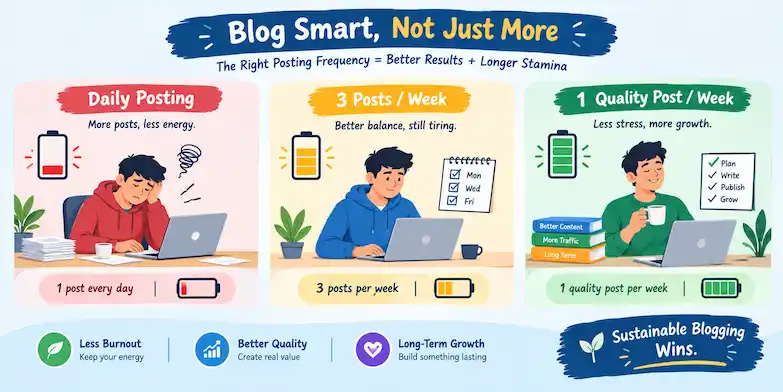
How Many Posts Per Week for SEO Growth?
Let’s simplify expectations.
Best Frequency Based on Goals
Slow but steady growth
- 1 post/week
- Ideal for beginners
Moderate growth
- 2 posts/week
- Faster keyword coverage
Fast authority building
- 3+ posts/week
- Requires strong planning
Remember:
👉 Publishing more helps only if quality stays high.
Practical Beginner Tips to Stay Consistent
Consistency is the hardest part of blogging. These tips help beginners succeed:
- Write outlines before drafting
- Batch-write 2 articles at once
- Keep a running idea list
- Use simple article templates
- Schedule writing days
- Avoid comparing your blog with big websites
“Small progress weekly creates big SEO results yearly”

Common Blogging Frequency Mistakes Beginners Make
Avoid these common traps:
1. Posting Daily Then Quitting
Many beginners start with extreme motivation and burn out quickly.
Better approach: start small and grow gradually.
2. Ignoring Content Quality
SEO is not a numbers game. Thin content rarely ranks.
3. Inconsistent Publishing
Posting 5 articles one month and none the next confuses both readers and search engines.
4. Copying Big Bloggers’ Schedules
Established sites have teams beginners usually work alone.
How Long Does Blogging Frequency Take to Affect SEO?
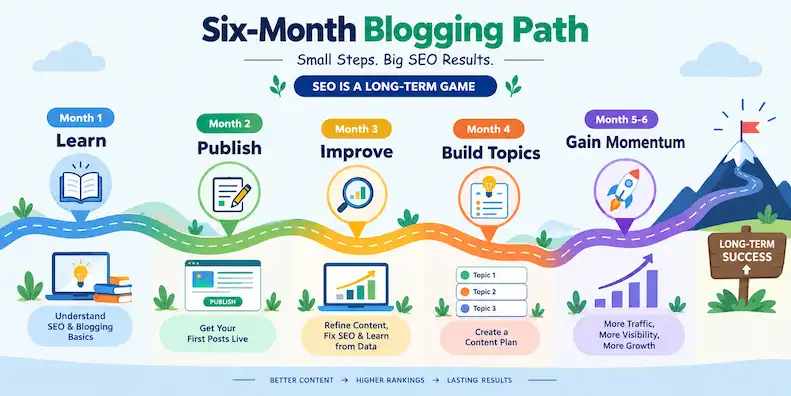
SEO results are gradual.
Typical timeline:
- 1–2 months: Google indexing improves
- 3–4 months: Early impressions appear
- 6 months: Traffic starts growing
- 9–12 months: Consistent ranking improvements
|
Consistency during this phase is critical. Many bloggers quit just before results appear. |
Recommended Blogging Frequency Strategy for Beginners
| If you want a simple rule to follow: |
|---|
|
Publish 1 high-quality article per week |
This approach builds authority safely and sustainably.
Conclusion: How Often Should You Blog for SEO?
So, how often should you blog for SEO?
The best answer is simple:
Blog as often as you can consistently publish helpful, high-quality content.
For most beginners, posting once per week is the perfect balance between learning, quality, and long-term SEO growth.
|
Remember, SEO success doesn’t come from publishing the most articles. It comes from showing up regularly, helping readers, and improving step by step. |
Stay consistent, stay patient, and your blog will grow.
|
Quick Quiz |
For most websites, posting 1–2 blog posts per week is a good starting point. It helps search engines see that your site is active. But quality is more important than quantity. A few helpful articles can perform better than many weak ones.
Yes, blogging once a week can still work well for SEO. The key is to publish useful content that answers real questions. If your posts are detailed and helpful, they can rank in search results. Consistency matters more than posting every day.
Publishing more blogs can help SEO because it gives you more chances to rank for keywords. However, the content must be useful and well written. Search engines focus on quality, not just volume. It is better to post fewer strong articles than many weak ones.
Blogging too often can hurt SEO if the content quality drops. Short or rushed articles may not help readers. Search engines prefer useful and clear content. It is better to follow a steady schedule you can maintain.
SEO from blogging usually takes 3 to 6 months to show results. Search engines need time to crawl and rank new content. If you keep publishing helpful articles, traffic can grow over time. Patience and consistency are important.






- Be Respectful
- Stay Relevant
- Stay Positive
- True Feedback
- Encourage Discussion
- Avoid Spamming
- No Fake News
- Don't Copy-Paste
- No Personal Attacks
- Be Respectful
- Stay Relevant
- Stay Positive
- True Feedback
- Encourage Discussion
- Avoid Spamming
- No Fake News
- Don't Copy-Paste
- No Personal Attacks
